
Can Hydro Jetting Damage Old Pipes?
Hydro jetting can worsen or expose damage in a drain or sewer pipe that is already cracked, severely corroded, separated, deformed, or partly collapsed. That does not mean every old pipe is unsuitable for jetting. Pipe age and material are only part of the decision; the line’s present condition, the obstruction, the access point, and the equipment setup matter more.
The safest answer comes from condition evidence. A plumber may need to inspect accessible piping, review prior repairs, obtain useful camera footage, and decide whether the line can tolerate cleaning before choosing a nozzle, flow, pressure, or another method. If the structure is unsound, repairing the damaged section first may be safer than trying to clean through it.
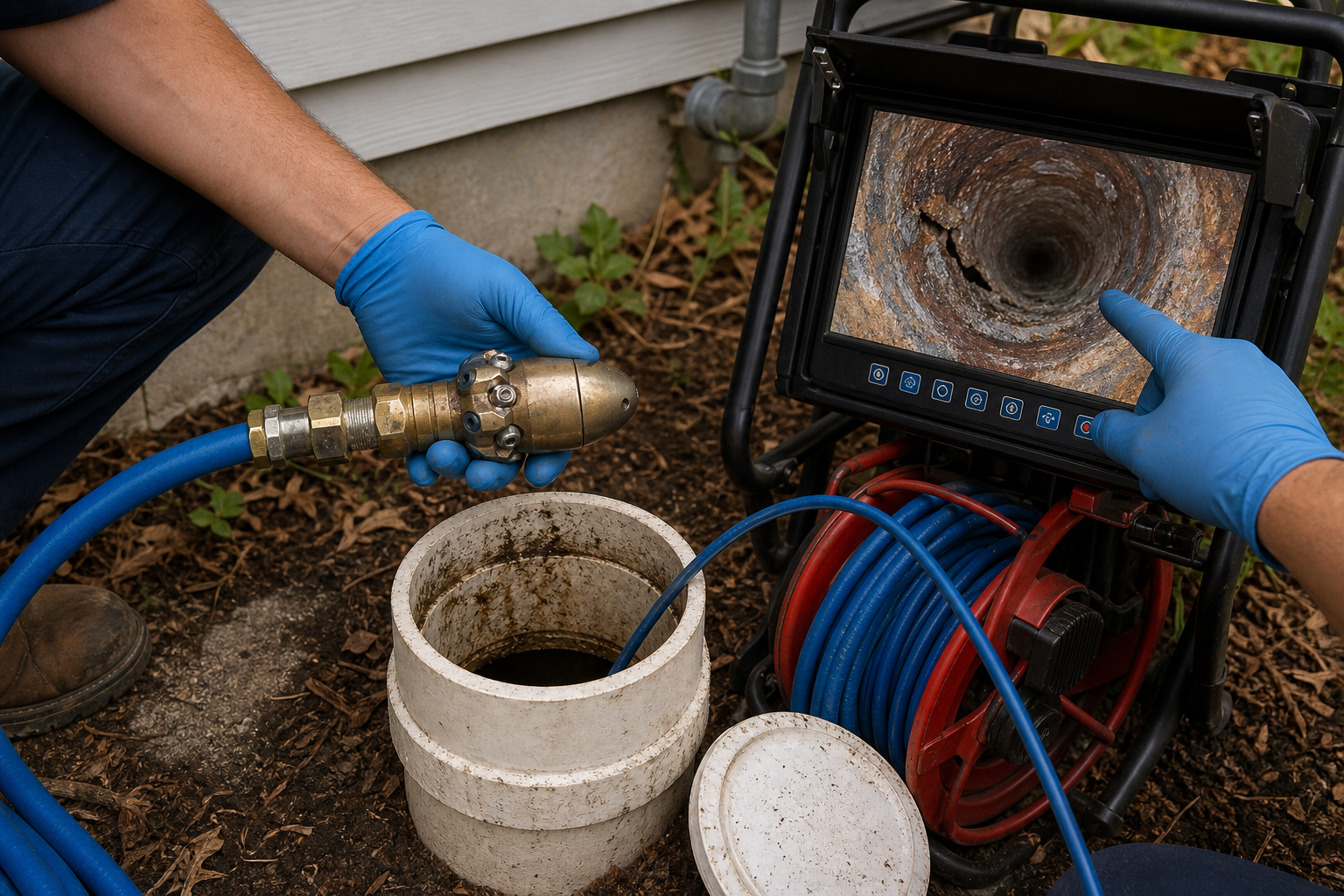
Age Alone Does Not Decide Whether Hydro Jetting Is Safe
Two pipes installed in the same decade can be in very different condition. One may have intact walls and aligned joints; another may have deep corrosion, root entry, a shifted joint, a belly, or previous patchwork. Soil movement, installation quality, water and waste conditions, recurring blockages, and past cleaning or repair work can all affect what remains underground.
An older date on a home inspection or property record therefore cannot approve or reject hydro jetting by itself. The plumber needs to know what material is present, where it changes, whether the line holds its shape, and what appears to be blocking flow. Access also matters. A stable cleanout that lets the hose follow the line is different from an approach that requires forcing equipment through a fixture or damaged fitting.
The question is not simply, “How old is this pipe?” It is, “What condition is the pipe in, what must be removed, and which method creates the least risk while accomplishing the immediate goal?”
Pipe Material Changes the Risks, Not the Need for Inspection
Material gives the plumber a useful starting point, but no common sewer material is automatically safe or unsafe.
Cast iron
Cast iron can remain serviceable for many years, but corrosion can reduce wall thickness, create rough scale, or weaken a section around the bottom of the pipe. The outside may also look better than the interior. Heavy scale in an otherwise stable line presents a different decision from a pipe with extensive wall loss, holes, failing joints, or a section that no longer holds its shape.
A camera may reveal surface deterioration or missing sections, but it cannot measure every hidden wall. If evidence points to severe corrosion, a plumber may limit cleaning, choose another approach, or recommend exposing and repairing the damaged area before jetting.
Clay
Clay sewer pipe is rigid and can be vulnerable at cracked, offset, or root-intruded joints. A sound, aligned section is not the same as a brittle section with a visible fracture. Roots also complicate the decision because removing a root mass does not repair the opening that allowed growth into the line.
Jetting may move loose root fragments or debris, but it cannot reseal a joint. When the footage shows displacement, a fracture, or continuing root entry, cleaning may be only one part of a repair plan.
Orangeburg
Orangeburg pipe can deform, delaminate, blister, or lose its original round shape. A narrowed or collapsed section is a structural problem rather than a normal deposit. Forcing a cleaning tool through that area may not restore usable flow and could disturb already weakened material.
If the line appears flattened, layered, or partially collapsed, the next step may be a repair or replacement evaluation instead of hydro jetting. The exact recommendation depends on how much of the run is affected and whether there is a safe way to confirm the condition.
PVC
PVC is often described as durable, but material alone is not a guarantee. Poorly aligned or separated joints, deformation, installation damage, an intrusive fastener, or a section stressed by movement can still make a line vulnerable. A newer PVC line with an obvious defect needs more caution than an older line with intact walls and joints.
The plumber should evaluate the visible condition, joint alignment, access, and obstruction instead of treating “PVC” as an automatic approval.
What a Sewer Camera Can and Cannot Confirm
A camera inspection can provide valuable evidence before cleaning. When the view is clear enough, it may show the visible pipe material, corrosion, cracks, offsets, standing water, roots, deformation, a collapsed section, or an unexpected material transition. It can also help identify where an obstruction begins and whether a downstream section appears open.
Camera footage has limits. It shows the surface within the camera’s field of view; it does not prove hidden wall thickness, strength outside the visible area, soil support, or the condition behind heavy buildup. Water, grease, roots, or debris may block the lens or hide the pipe wall. A clear-looking section also cannot guarantee that every joint or concealed weakness will tolerate a particular cleaning setup.
Sometimes a plumber cannot advance the camera past the blockage. A limited clearing step may be needed to create a usable opening, followed by another inspection. That is not permission to push aggressively through a suspected collapse. The initial method should be chosen to reduce risk while gathering better evidence.
Urban Plumbing’s main sewer inspection, rodding, and repair options can help connect the observed obstruction to an appropriate diagnostic and service path.
Why Pressure Is Only One Part of the Setup
Homeowners sometimes ask for a single pressure number that makes hydro jetting safe. There is no universal setting that approves every old line. Pump pressure is only one variable, and it does not describe the force at every surface inside a pipe.
The plumber also considers water flow, nozzle design and direction, hose size, pipe diameter, access, distance, bends, the type of deposit, and how the operator advances and retrieves the equipment. A nozzle selected for grease in a stable line may not be appropriate for roots, heavy scale, or a pipe with a questionable joint. Reducing pressure may be one adjustment, but it cannot make a collapsed or severely weakened pipe structurally sound.
Technique matters as well. Holding a nozzle in one area, using the wrong pattern, or trying to force equipment through a defect can create risks that a number on the machine does not capture. That is why homeowners should not rent a jetter, open a backed-up cleanout, or experiment with pressure on a line that may be damaged. High-pressure equipment and wastewater exposure require trained handling.
For a stable line with a suitable obstruction, hydro jetting in Lake Zurich may be one evidence-supported cleaning option. The condition assessment should come first.
When Another Cleaning Method May Be the Better First Step
Hydro jetting is not the only way to restore limited flow or obtain a better view. Mechanical rodding or another controlled clearing method may be appropriate for a specific obstruction, access point, and pipe condition. It is not automatically safer, however. A cutting head or cable can also encounter a separated joint, fragile wall, or collapse.
The plumber should choose the least risky method that addresses the verified problem. Examples include:
- Making a limited opening through soft blockage so a camera can pass.
- Removing a localized obstruction without attempting to scour the entire run.
- Using equipment suited to the pipe diameter and access rather than forcing a larger tool through the line.
- Stopping when resistance or footage suggests a structural defect.
- Repairing an unstable section before completing the cleaning.
Homeowners comparing drain cleaning and repair should ask what evidence supports the proposed method, what condition would cause the work to stop, and whether another inspection will follow.
Damage Hydro Jetting Cannot Repair
Cleaning and structural repair solve different problems. Hydro jetting may remove grease, soft deposits, scale, sludge, or loose root fragments when the pipe and access are suitable. It does not rebuild a corroded wall, close a crack, seal a separated joint, correct a belly, restore a deformed pipe, or reverse a collapse.
It also does not eliminate the opening where roots entered. Even if cleaning improves flow, roots can return while the defect remains. A pipe may look clearer on the follow-up camera but still need a spot repair or a larger replacement plan.
When the evidence shows a structural failure, sewer repair in Lake Zurich may need to come before or after carefully limited cleaning. The repair scope should match the actual defect rather than a promise that every old line can be made “like new.”
Warning Signs That Call for a Cautious Evaluation
Symptoms cannot identify the pipe material or prove where damage exists, but they can help a plumber prioritize the investigation. Share whether the property has:
- Repeated main-line backups after prior cleaning.
- Several fixtures slowing or backing up at the same time.
- A known history of roots, offsets, collapse, or spot repairs.
- Standing water or a persistent low area seen in previous camera footage.
- Soil settlement, excavation, or construction near the sewer route.
- Pieces of corroded material or unusual debris recovered during earlier work.
- A blockage that previous equipment could not pass.
Provide any prior video, repair invoice, sketch, or access-point information you have. These records may help the plumber understand where materials change and avoid repeating an approach that did not resolve the cause.
If sewage is actively backing up, reduce water use so more waste is not sent into the blocked line. Keep people and pets away, avoid direct contact, and stay clear of water near electrical equipment. Do not remove a cleanout cap that may be holding back wastewater.
For blockages associated with household fats, oils, or grease, separate grease prevention habits may reduce new deposits, but prevention cannot correct an existing structural defect.
Questions to Ask Before Approving the Work
A clear recommendation should connect the method to observed conditions. Ask the plumber:
- What material and visible condition could be confirmed?
- Was the camera view complete, or did water and debris hide part of the pipe?
- What appears to be blocking flow?
- Is there evidence of corrosion, cracks, offsets, deformation, or collapse?
- Which access point and pipe diameter will the equipment use?
- Why is the proposed nozzle and cleaning method appropriate for this condition?
- What finding would cause the work to stop?
- Will the line be inspected again after cleaning?
- Does any defect need repair even if flow improves?
The answers should account for uncertainty. A plumber may be able to identify a visible defect without claiming to know the strength of every hidden section. That honest boundary is more useful than a blanket statement that all old pipes can or cannot be jetted.
Schedule a Pipe-Condition Assessment in Lake Zurich
An older sewer line does not need to be rejected on age alone, and it should not be approved for hydro jetting without condition evidence. Urban Plumbing can evaluate the access, visible pipe condition, obstruction, and available inspection history, then explain whether controlled jetting, mechanical clearing, targeted repair, or replacement is the safer next step.
Contact Urban Plumbing to schedule an assessment for an older drain or sewer line in Lake Zurich before choosing a cleaning method.