
Why Does My Water Heater Pilot Light Keep Going Out?
A gas water-heater pilot keeps going out when the heater cannot maintain or verify a stable flame, so the safety control stops gas flow. The underlying condition may involve the pilot flame, a thermocouple or other flame-sensing component, combustion air, a draft or venting problem, moisture, the gas supply, or the gas control itself.
Repeated relighting is not a diagnosis. If the flame will not remain stable, stop testing and have the exact heater and installation inspected.
Treat Gas or Combustion Warnings as Urgent
Leave the building if you smell gas. Do not light a match, operate a switch, unplug equipment, or use a phone inside the affected area. Follow the gas utility’s emergency instructions or contact emergency services from a safe location.
Stop using the heater for a carbon-monoxide alarm, soot around the draft hood or burner area, scorching, smoke, a burning odor, a displaced vent connector, or an abnormal combustion smell. Move to fresh air and follow the alarm manufacturer, gas utility, or emergency-service guidance.
Do not keep relighting a pilot that goes out immediately or repeatedly. Each shutdown is the safety system responding to a condition that has not been identified.
The Flame-Sensing Circuit May Not Prove a Stable Pilot
Many conventional gas water heaters use a thermocouple or thermopile positioned in the pilot flame. When heated correctly, it produces the signal the gas control needs before allowing gas to remain open. Other heaters use a flame rod, electronic ignition, or an integrated control with a different sequence.
A sensor may be worn, out of position, poorly connected, or no longer heated by the correct part of the flame. The same symptom can occur when the sensor is working properly but the pilot flame is too weak or unstable to heat it.
Replacing a sensor without observing the flame and checking the control circuit can miss the cause. The exact model and manufacturer sequence determine which components and measurements apply.
A Weak or Unstable Pilot Flame Needs Diagnosis
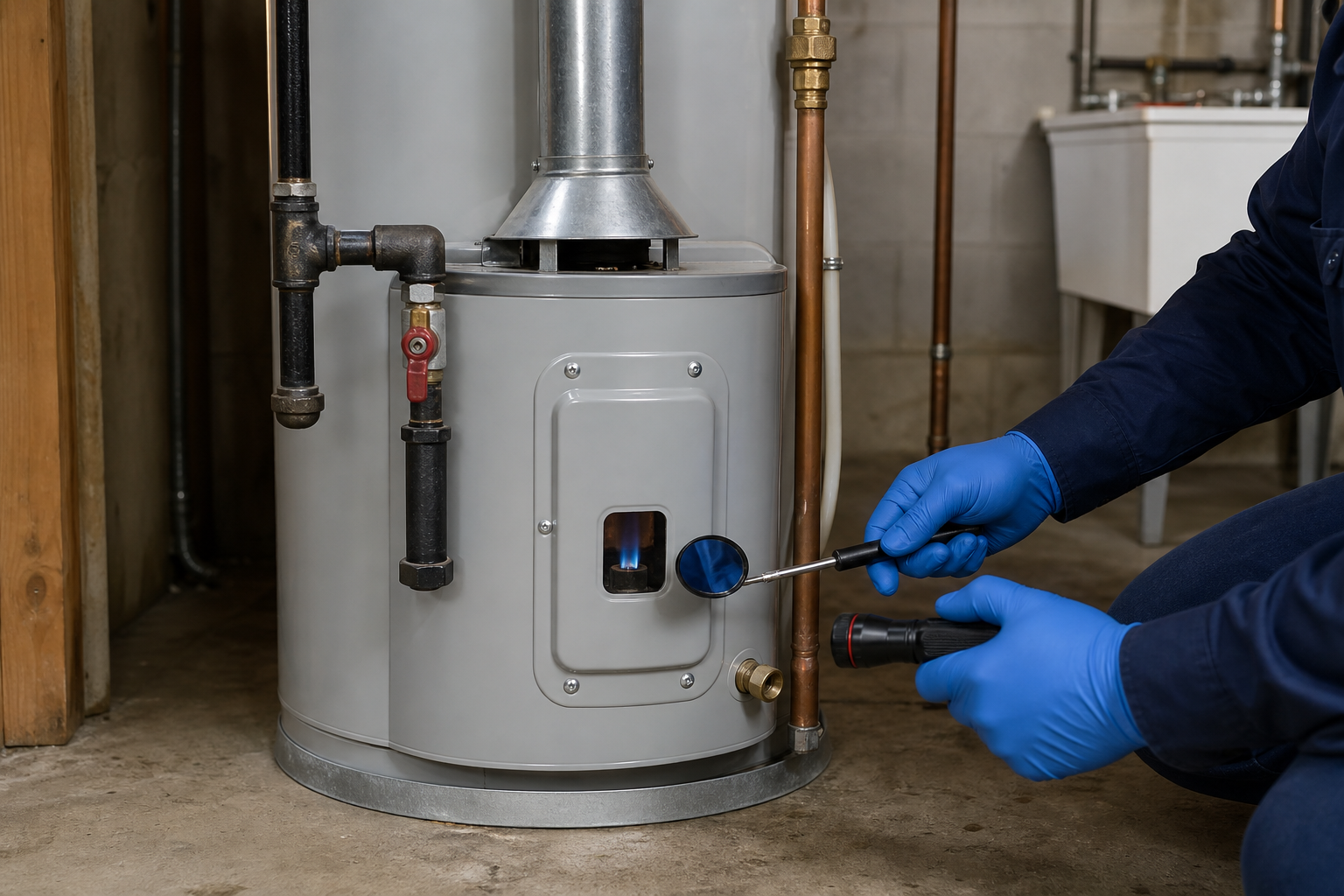
A healthy pilot pattern depends on the heater design. Through an intact sight glass, a homeowner may notice that the flame is unusually small, yellow, flickering, lifting away, or disappearing when the main burner starts. Those observations are useful, but flame color or shape alone cannot identify one failed part.
Possible conditions include debris at the pilot opening, a restricted pilot tube, a supply issue, an incorrect gas condition, a damaged component, or disturbed combustion air. Do not open the burner compartment, clean an orifice, bend tubing, or adjust gas pressure. Those steps can damage the safety seal or create unsafe combustion.
Drafts and Combustion Air Can Affect the Pilot
Atmospheric water heaters draw combustion air from the surrounding area and rely on the vent system to carry combustion products out. A strong nearby draft, a closed mechanical space, exhaust equipment, a blocked air opening, or a venting problem can disturb operation.
Timing provides useful evidence. Note whether the pilot goes out when a dryer, kitchen exhaust, bathroom fan, furnace, or another fuel-burning appliance operates. Also note whether the pattern follows high winds or a recent change to doors, windows, insulation, or mechanical-room storage.
Do not test the condition by blocking an opening, disconnecting a vent, opening the burner door, or operating several appliances repeatedly. A plumber or qualified gas technician should evaluate venting, draft, and combustion air using methods appropriate to the installation.
Venting Problems Can Trigger a Safety Shutdown
A loose, corroded, undersized, obstructed, or poorly pitched vent connector can affect draft. Some heaters also have temperature-sensitive safety devices that respond when combustion products spill or the burner area overheats.
Look only from a safe distance for an obviously displaced connector, heavy corrosion, soot, or scorching. Do not touch the vent because it can be hot, and do not reconnect or tape it as a temporary repair.
A pilot that stays lit when the burner is off but goes out during or after a heating cycle may give the technician a useful sequence to reproduce. It does not prove that the vent is the cause.
Moisture or Water Can Disrupt the Burner Area
Condensation during certain operating conditions, a plumbing leak above the heater, or water entering near the burner area can affect ignition and flame sensing. Moisture may also damage controls or wiring.
Do not reach into a wet burner compartment or touch wet electrical components. If water is actively leaking onto the heater, shut off the affected water supply only when you can identify and operate the correct valve safely. Leave gas controls and electrical connections alone.
The Gas Control or Supply May Be Involved
The control valve regulates gas to the pilot and main burner while monitoring safety inputs. A control fault can stop the pilot, but so can an upstream supply interruption or another condition that tells a working control to close.
The fact that another gas appliance operates does not prove the water heater receives the correct gas condition under load. Gas pressure, regulator, valve, and control checks require suitable instruments and qualified handling. Do not loosen a gas fitting or try to measure pressure yourself.
Safe Observations to Record
You can help the diagnosis without disassembling the heater:
- Record the model and serial information from the exterior label.
- Note whether the pilot goes out immediately, after the main burner starts, or after a complete heating cycle.
- Observe the flame only through the intended sight glass.
- Photograph any control-light pattern or error exactly as it appears.
- Note whether hot water was used just before the shutdown.
- Record wind, nearby exhaust-fan, dryer, furnace, or door-position timing.
- Look for visible water, soot, scorching, or a displaced vent from a safe distance.
- Note recent plumbing, venting, appliance, remodeling, or utility work.
- Keep the manufacturer instructions available for the appointment.
Do not remove a sealed access panel, bypass a switch, clean the pilot assembly, bend a sensor, or repeatedly reset the control.
What a Professional Diagnosis May Include
The technician should identify the exact ignition and flame-proving design before testing. Depending on the model and evidence, the evaluation may include:
- Reproducing the shutdown sequence under controlled operation.
- Observing pilot and main-burner flame behavior.
- Checking the applicable thermocouple, thermopile, flame rod, wiring, and control connections.
- Inspecting the pilot assembly without altering its calibrated parts.
- Reviewing gas-control error information and manufacturer procedures.
- Evaluating visible vent condition, draft, combustion air, and spillage.
- Checking for moisture, overheating, or a triggered safety device.
- Measuring gas-supply conditions when qualified and appropriate.
- Confirming that the source of the symptom is identified before a part is replaced.
Urban Plumbing’s water heater repair and installation service can evaluate the pilot problem as part of the complete heater and venting condition. A repair recommendation should connect to the observed failure rather than assume the most common part is responsible.
Maintenance Is Not a Substitute for Pilot Diagnosis
Sediment removal can be useful tank maintenance, but a pilot that will not remain lit does not prove the tank needs flushing. Follow model-specific water heater flushing guidance separately from gas and combustion diagnosis.
Lake Zurich cold weather can increase hot-water demand and affect utility spaces, but winter alone does not identify the failed component. The existing winter water-heater maintenance guidance can help homeowners document seasonal conditions without encouraging burner or gas adjustments.
When Repair or Replacement May Be Discussed
A limited repair may be appropriate when testing confirms a replaceable sensor, pilot component, control, connection, vent connector, or installation issue and the tank remains in sound condition. Replacement may enter the discussion when the tank leaks, the heater has multiple significant defects, required parts are unavailable, or safe correction would be impractical.
Age alone should not decide the outcome, and a failed pilot alone does not mean the complete heater must be replaced. The recommendation should account for the tank, burner, venting, controls, repair history, and verified condition.
Request Water-Heater Service in Lake Zurich
If your gas water-heater pilot will not stay lit, stop repeated relighting and record when the shutdown occurs. Contact Urban Plumbing to arrange a condition-led inspection of the heater, flame-sensing system, gas control, combustion air, and venting.
A pilot that keeps going out can point to a gas supply problem. Our gas line leak detection service tests the line before you replace the heater.