
Why Is My Sewage Ejector Pump Humming but Not Pumping?
A sewage ejector pump may hum without pumping when the motor or control is trying to operate but the pump cannot start or move wastewater normally. A jammed pump or impeller, a motor or starting-component fault, a restricted discharge, a stuck check valve, a float or control problem, or too much load can all produce sound without useful flow. The hum alone does not identify which condition is present.
Stop using the basement or lower-level fixtures that depend on the ejector until wastewater evacuation is confirmed. Do not loosen the sealed basin cover, disconnect the vent, reach inside, contact sewage, or keep resetting a breaker. A sewage ejector is a contaminated, sealed plumbing system with electrical equipment, so diagnosis belongs outside the basin until a qualified technician has isolated the system and established the necessary safety controls.
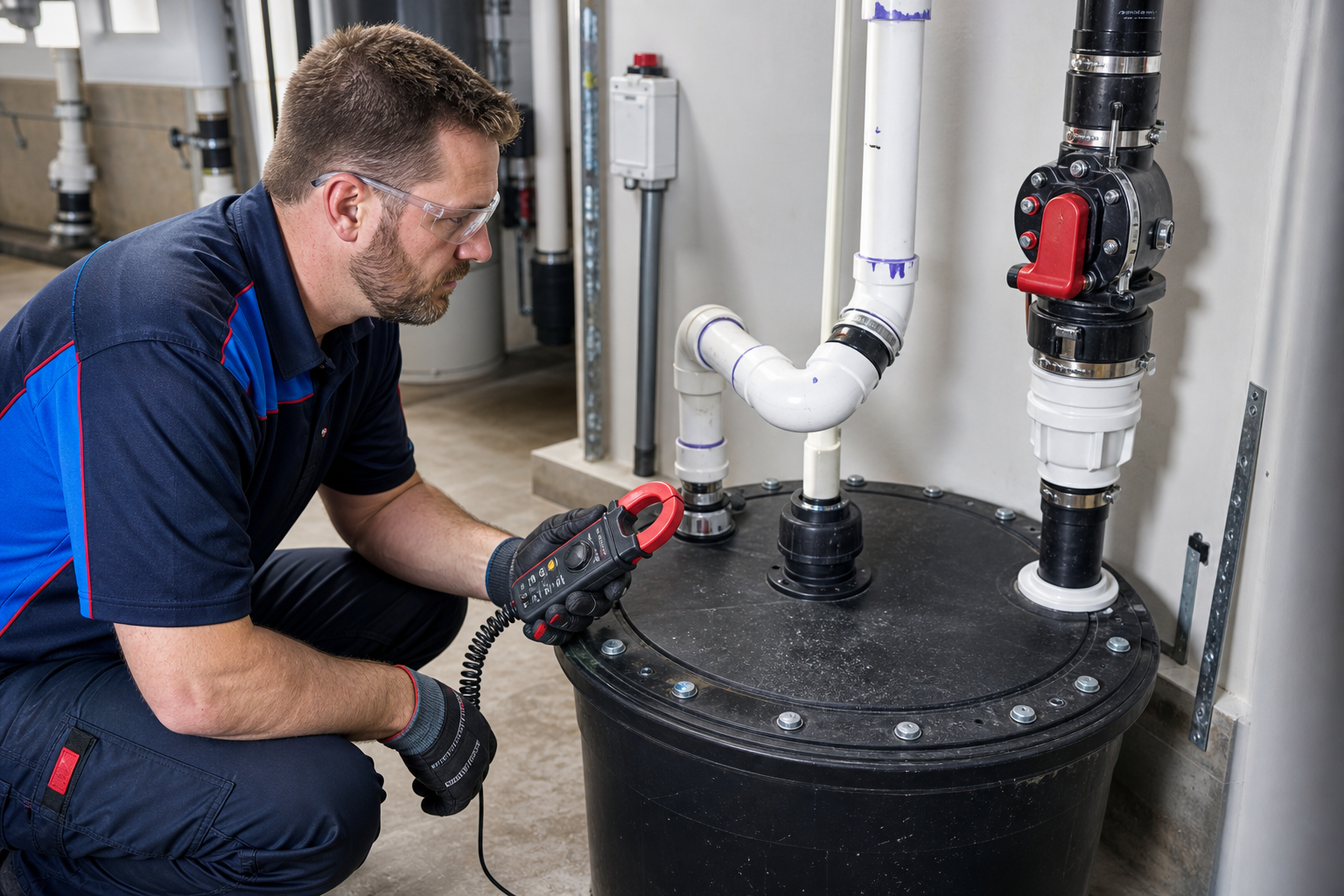
Treat Rising Wastewater or Electrical Warnings as Urgent
Stop adding wastewater immediately if a toilet, shower, sink, floor drain, or laundry connection served by the ejector begins backing up. Keep people and pets away from the affected area. Do not test the pump by flushing again or running more water.
Prompt professional help is especially important when you notice:
- Wastewater rising in a lower-level fixture or escaping near the basin.
- A high-water alarm that remains on while connected fixtures will not drain.
- Humming that continues without any sign of wastewater leaving the basin.
- A breaker that trips, a burning odor, unusual heat, smoke, or visible electrical damage.
- Water or sewage around a receptacle, control, cable, or other electrical component.
- A strong sewer-gas odor along with a loose, damaged, or visibly disturbed basin seal or vent connection.
Do not touch wet electrical equipment. If sewage has already escaped, avoid direct contact and isolate the area until the plumbing problem and appropriate cleanup can be addressed.
A Sewage Ejector Is Not the Same as a Sump Pump
The distinction matters because the systems handle different liquids and require different safety precautions.
A sump pump generally removes groundwater that collects around a foundation or drain-tile system. Its job is to protect a basement or crawl space from groundwater intrusion. A sewage ejector receives wastewater from fixtures located below the level where gravity can carry that wastewater into the building sewer. A basement bathroom, laundry, utility sink, or other lower-level fixture may depend on it.
The ejector basin is sealed and vented because it may contain sewage, solids, and sewer gas. The lid, gasket, vent, piping penetrations, and fasteners are functional parts of that boundary. Opening the cover to look for a jam is not equivalent to looking into a typical groundwater sump pit.
If you determine that the affected equipment is a groundwater sump rather than a sewage ejector, Urban Plumbing’s explanation of a sump-pump float switch that is not working describes that separate system. Do not transfer open-sump checks to a sealed wastewater basin.
Confirm Which Fixtures Are Affected
The affected fixture pattern helps separate an ejector problem from a wider drainage problem.
If only the basement bathroom, laundry, or other fixtures routed to the ejector stop draining while upper-level fixtures continue to work normally, the ejector system becomes a stronger area for diagnosis. If toilets, sinks, tubs, or floor drains throughout the home are slow or backing up, the condition may involve the building drain or main sewer instead of, or in addition to, the ejector.
Do not keep using upper-level fixtures simply because they still drain at first. Their wastewater may enter a restricted downstream line and worsen a backup. A plumber can determine whether the symptom belongs to the ejector branch, the main sewer and drainage system, or both.
The Pump or Impeller May Be Unable to Turn
An electric motor can make a humming sound when it receives power but cannot rotate normally. In an ejector pump, wastewater solids, unsuitable material, internal damage, a seized bearing, or a jammed impeller can prevent movement.
The sound does not reveal whether the obstruction is inside the pump, at an inlet, or elsewhere in the system. It also does not show whether the motor has already been damaged by repeated attempts. Some pumps stop through internal overload protection and may try again after cooling, while other designs respond differently.
Do not loosen the cover, remove the pump, pull on cables, or insert a tool into the basin. A technician needs contamination controls, electrical isolation, and model-appropriate procedures before accessing the pump.
A Motor or Starting Component May Have Failed
Some ejector pumps use model-specific starting components, controls, or relays to bring the motor up to speed. A failed component, damaged winding, seized motor, poor connection, or incorrect electrical condition can leave the equipment humming without starting correctly.
A clamp-meter reading, voltage check, winding test, or capacitor evaluation is not a homeowner troubleshooting step. Those tests involve electrical hazards and must account for the exact pump, control arrangement, wet location, and manufacturer procedure.
Do not keep resetting a breaker that trips. A repeated trip can indicate an overload, short, locked motor, damaged cable, wet connection, or another condition that needs to remain de-energized until it is evaluated. Record what happened and stop using the fixtures that feed the ejector.
The Discharge Path or Check Valve May Be Restricted
The pump can run or try to run without lowering the basin level when wastewater cannot move through the discharge piping. Possible conditions include a blockage, damaged pipe, stuck check valve, or an isolation valve that is not in its normal operating position when the installation includes one.
The check valve is intended to limit wastewater from returning toward the basin after a pump cycle. A valve that is stuck closed can restrict outgoing flow. A valve that does not close can allow wastewater in the discharge pipe to return, causing repeated cycling or another high-water condition. Sound alone cannot distinguish those failures.
Do not loosen a union, remove a cleanout, strike the valve, or open the discharge line. The pipe may be pressurized or contain contaminated wastewater. A technician should verify the flow path and valve operation under controlled conditions.
The Float, Alarm, or Control May Be Calling at the Wrong Time
Depending on the system, a float, level sensor, switch, relay, or control panel tells the pump when wastewater has reached the operating level. A stuck or damaged level device can fail to start the pump, keep it energized too long, or call for operation when the basin condition does not match the command.
The sound may also come from a relay or control rather than the pump motor itself. Note where the sound seems loudest from a safe distance, but do not remove a panel or touch wiring to confirm it.
A high-water alarm is a warning that the wastewater level may be above the normal operating range. Silencing an alarm does not restore pumping. Stop fixture use and have the pump, level control, alarm, and discharge condition evaluated together.
Excessive Inflow or Unsuitable Material Can Overload the System
An ejector has limits determined by its pump, basin, discharge route, connected fixtures, and installation. A sudden volume of wastewater can raise the level faster than a compromised or undersized system can lower it. Wipes, hygiene products, rags, or other unsuitable material may also obstruct the pump or piping.
Do not assume that overload is the cause merely because the problem followed laundry use, guests, or repeated toilet flushing. The timing is useful evidence, but a normal household event may simply expose an existing pump, control, or discharge fault.
Avoid adding drain chemicals to the affected fixtures or basin. Chemicals do not correct an electrical or mechanical failure and can increase exposure risk when the sealed system must be serviced.
Safe Observations to Record From a Dry Position
You can give the plumber useful information without opening or touching the ejector system:
- Identify which lower-level fixtures stopped draining and whether upper-level fixtures are also affected.
- Note when the humming starts, how long it lasts, and whether it stops on its own.
- Record whether the sound seems to come from the basin, check-valve area, discharge pipe, alarm, or control.
- Photograph the alarm light or external indicator without opening a panel.
- Note whether a clearly labeled breaker has already tripped, but do not reset it repeatedly.
- Record recent power interruptions, plumbing work, pump service, unusual fixture use, or a prior alarm.
- Look from a dry position for wastewater at fixtures, moisture outside the basin, a visibly disturbed lid, or a loose external pipe connection.
- Note whether there is any visible discharge at the normal termination when that location can be observed safely without approaching wastewater or electrical equipment.
- Keep the pump, alarm, and control model information available if it can be read from an exterior label.
Do not run more water to create a better video or sound recording. The safest evidence is what the system is already doing before additional wastewater enters it.
What a Professional Diagnosis May Include
A condition-led diagnosis starts by confirming which fixtures and piping depend on the ejector and whether the wider building drain is flowing. The technician can then identify the pump and control design before selecting tests.
Depending on the evidence and installation, professional work may include:
- Confirming the alarm, float, level sensor, relay, and control sequence.
- Measuring electrical conditions and motor current with appropriate wet-location safeguards.
- Determining whether the pump attempts to start, runs without flow, or is stopped by overload protection.
- Checking the accessible discharge piping, check valve, and any installed isolation valve.
- Establishing contamination controls before opening the sealed basin when internal access is necessary.
- Inspecting the pump, impeller, inlet, wiring, and basin only after proper electrical isolation.
- Checking for unsuitable material, internal damage, a restricted flow path, or a failed motor.
- Restoring the basin gasket, fasteners, piping penetrations, and vent connection so the sealed boundary remains intact.
- Testing normal operation after the cause is corrected without overfilling or repeatedly stressing the system.
Urban Plumbing’s sump and ejector pump service can evaluate the sound, controls, pump, and discharge condition as one system instead of replacing a guessed component.
Repair or Replacement Depends on the Verified Condition
A repair may be possible when diagnosis confirms an accessible control, float, check valve, connection, or removable obstruction and the pump remains serviceable. Pump replacement may enter the discussion when the motor is failed, the pump is damaged or seized, the equipment cannot handle its intended service, compatible parts are unavailable, or repeated failures make a limited repair impractical.
Age alone does not prove the pump needs replacement. A hum alone does not prove the motor is ruined. The recommendation should account for the pump condition, electrical tests, discharge path, control operation, basin seal, connected load, repair history, and exact failure that was reproduced.
Request Sewage Ejector Pump Service in Lake Zurich
If a sewage ejector pump hums but the wastewater level does not fall, stop using the fixtures served by that system and keep the sealed basin closed. Document the alarm, sound, affected fixtures, and any visible backup from a dry position. Contact Urban Plumbing to request a Lake Zurich sewage-ejector inspection before more wastewater enters the system.
Frequently Asked Questions
Why does my ejector pump hum but not move wastewater?
The pump or control may be trying to operate while a jammed impeller, seized motor, starting-component fault, restricted discharge, stuck check valve, level-control problem, or excessive load prevents flow. The sound does not identify one cause, so stop fixture use and have the sealed system diagnosed.
Can I open the ejector basin to see whether the pump is jammed?
No. The sealed basin may contain sewage, solids, sewer gas, and electrical equipment. Do not loosen the lid, disturb the vent, reach inside, or attempt pump removal. Internal access requires electrical isolation, contamination controls, and procedures appropriate to the exact system.
Is a humming sewage ejector the same as a humming sump pump?
No. A sump pump generally moves groundwater, while a sewage ejector moves wastewater from fixtures located below the gravity sewer connection. Some mechanical symptoms can sound similar, but the sealed contaminated basin changes the safety and service requirements.
Should I reset the breaker if the ejector pump stopped?
Do not repeatedly reset a tripped breaker. A trip can indicate a locked motor, overload, short, wet connection, damaged cable, or another electrical fault. Stop using the connected fixtures and have the pump and circuit evaluated safely.
What if fixtures throughout the house are backing up?
That pattern may involve the building drain or main sewer rather than only the ejector branch. Stop adding wastewater and tell the plumber which upper- and lower-level fixtures are affected so the correct drainage path can be diagnosed.